A New Walking Route Celebrates the Legacy of William Tyndale
A new walking trail, celebrating the legacy of the renowned Bible translator William Tyndale, has been introduced in south-west England. This initiative is part of the commemorative events marking the 500th anniversary of his pioneering English New Testament translation.
The “Tyndale Trail,” crafted by writer Anne Hayward, spans 28 miles over two days and connects significant sites related to Tyndale’s life across Gloucestershire and Bristol. This trail allows participants to explore landscapes linked to Tyndale’s formative years and ministry.
Anne Hayward embarked on a personal pilgrimage last year that inspired the trail. She recounted, “In September 2024 I had the opportunity to walk on pilgrimage between the cities of Gloucester and Bristol in order to visit sites associated with the Bible translator William Tyndale.”
The route connects various historic locations such as Little Sodbury Manor, where Tyndale spent two years as a tutor, and other notable places like Chipping Sodbury, Iron Acton, North Nibley, and central Bristol. Walkers can also visit landmarks commemorating Tyndale’s legacy, including the Tyndale Baptist Church in Bristol and the Tyndale Monument near North Nibley.
This trail primarily follows pre-existing footpaths and walking routes, passing through areas of broader historical significance. Hayward emphasized, “To mark the 500th anniversary of Tyndale’s translation of the New Testament … I have devised a walking trail in his home area which connects several key places in his life as well as various commemorations to him in more recent years.”
Designed for walkers of all experience levels, the trail is mapped on standard Ordnance Survey maps and can be completed within two days. Additional sites connected to Tyndale, such as Berkeley, Slimbridge, and Frampton on Severn, are accessible via short detours or local travel.
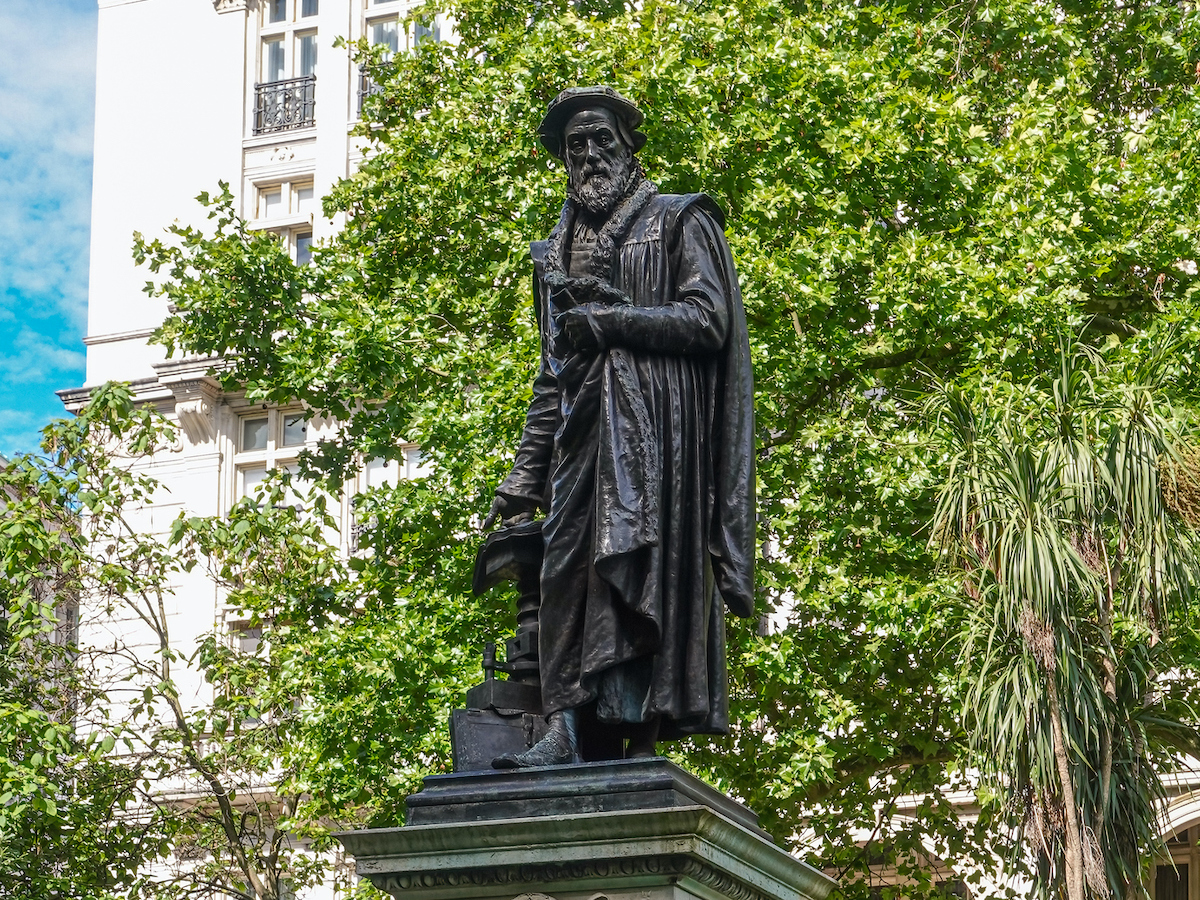
This trail is part of a broader anniversary celebration of William Tyndale (c.1494–1536), whose New Testament translation from Greek to English was pivotal in Bible history. Tyndale’s work set the stage for future English translations, including the King James Version, making Scripture accessible to the general populace.
Tyndale’s dedication came at a personal cost, leading to his exile, arrest, and eventual execution. Today, he is acknowledged as a foundational figure in the history of the English Bible, a legacy that the new trail seeks to illuminate through the locations he frequented.
Anne Hayward expressed her hopes for the trail: “William Tyndale is one of the most significant figures in British history and yet few know anything about his early life in Gloucestershire. I hope people will enjoy walking this trail.” By following Tyndale’s path, walkers can experience the historical backdrop of the English Reformation and appreciate the lasting influence of a figure who believed that even “a boy that driveth the plough” should comprehend the Scriptures.
This article was originally written by www.christiantoday.com