Blind Students Face Challenges in Graduate Programs: New ADA Regulations Aim for Change
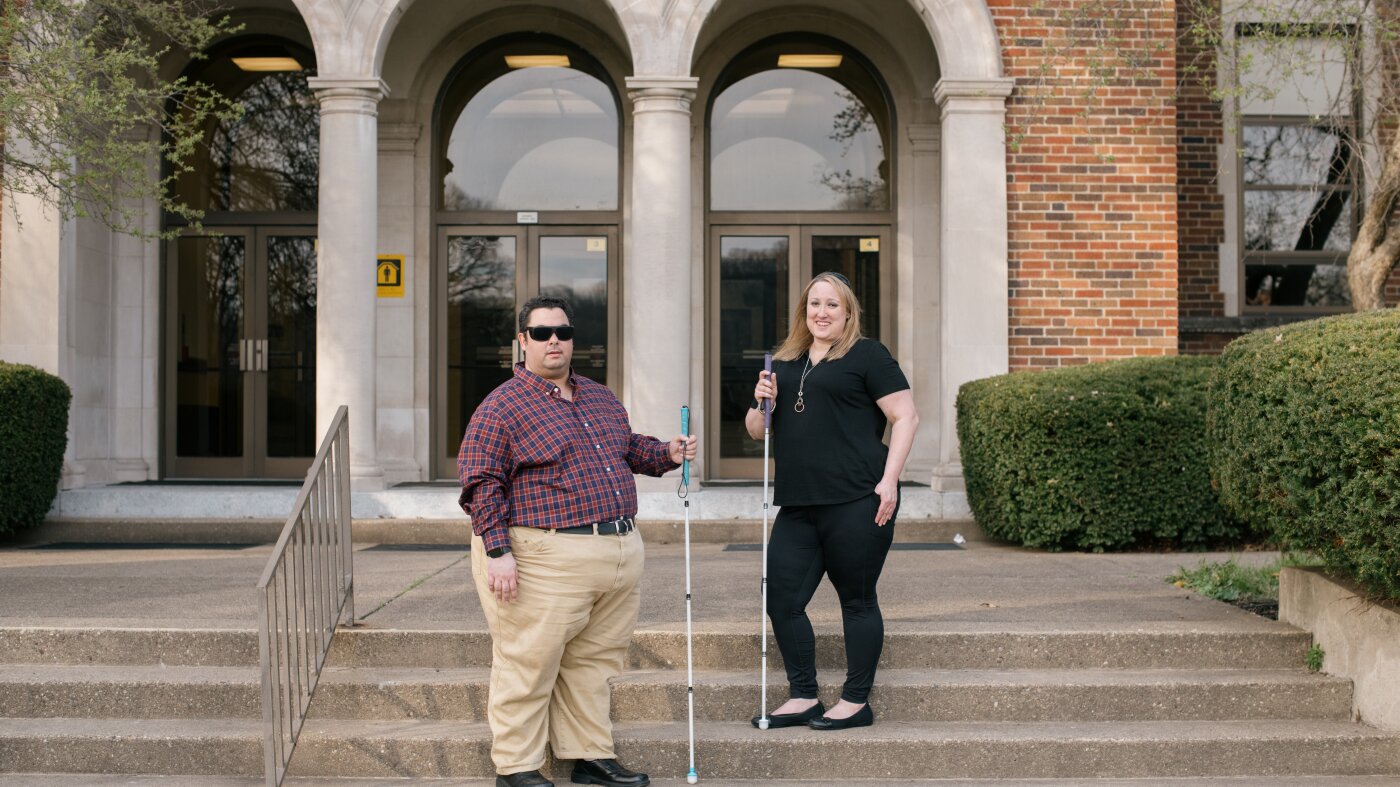
For Harold Rogers and Miranda Lacy, graduate school was not just a continuation of their educational journey, but a test of endurance. As blind students at West Virginia University (WVU), they encountered a series of hurdles that highlighted the persistent issue of digital accessibility in higher education.
Unseen Barriers in Online Education
Rogers and Lacy, both alumni of West Virginia State University, enrolled in an online Master’s program in Social Work at WVU. However, their excitement soon turned into frustration as they faced inaccessible learning materials. “It’s been like going down a ski slope without any assistance,” says Rogers, illustrating the difficulties they encountered with screen readers, essential tools for visually impaired individuals.
Inaccessible PDFs and course modules made navigating their courses akin to an obstacle course. The screen reader’s struggles with poorly formatted documents added to their challenges, causing disruptions in their learning process.
Advocating for Change
Rogers and Lacy’s efforts to seek accommodations from WVU went unanswered, leading them to take legal action with the support of the National Federation of the Blind. They filed a lawsuit against the university, claiming systematic denial of equal access for blind students. Despite their efforts to work with WVU, the situation escalated, prompting them to push for institutional changes.
ADA Update: A Step Toward Inclusivity
While Rogers and Lacy were advocating for their rights, the U.S. Department of Justice was working on updating regulations under the Americans with Disabilities Act (ADA). The new rules, effective end of April, aim to set clear standards for digital accessibility in public institutions, including colleges. The guidelines require adherence to the Web Content Accessibility Guidelines (WCAG 2.1), addressing issues like color contrast and navigability without a mouse.
Jennifer Mathis, who contributed to drafting the new rule, emphasized the necessity for technical standards to address widespread inaccessibility. The changes are expected to benefit a broad range of users, enhancing the overall digital environment in educational institutions.
Looking Ahead
As the new ADA regulations take effect, colleges and universities must shift towards creating content that is “born accessible.” This shift involves a cultural change within institutions, requiring faculty and administrators to take ownership of accessibility.
For Rogers and Lacy, the hope is that their struggle will pave the way for a more inclusive future for students with disabilities, ensuring that educational institutions are equipped to meet the needs of all students.
Edited by: Steve Drummond
Visual design and development by: LA Johnson