The Hidden Challenge of Teen Gambling: Emerging Trends and Concerns
Raising children in today’s world comes with various challenges. For Kim Freudenberg, a teacher in San Francisco, addressing the usual concerns like drugs and social media was just the beginning. Surprisingly, the concept of gambling wasn’t part of her initial warnings to her sons.
“Never once did I even think that I needed to say ‘gambling,'” Freudenberg recalls.
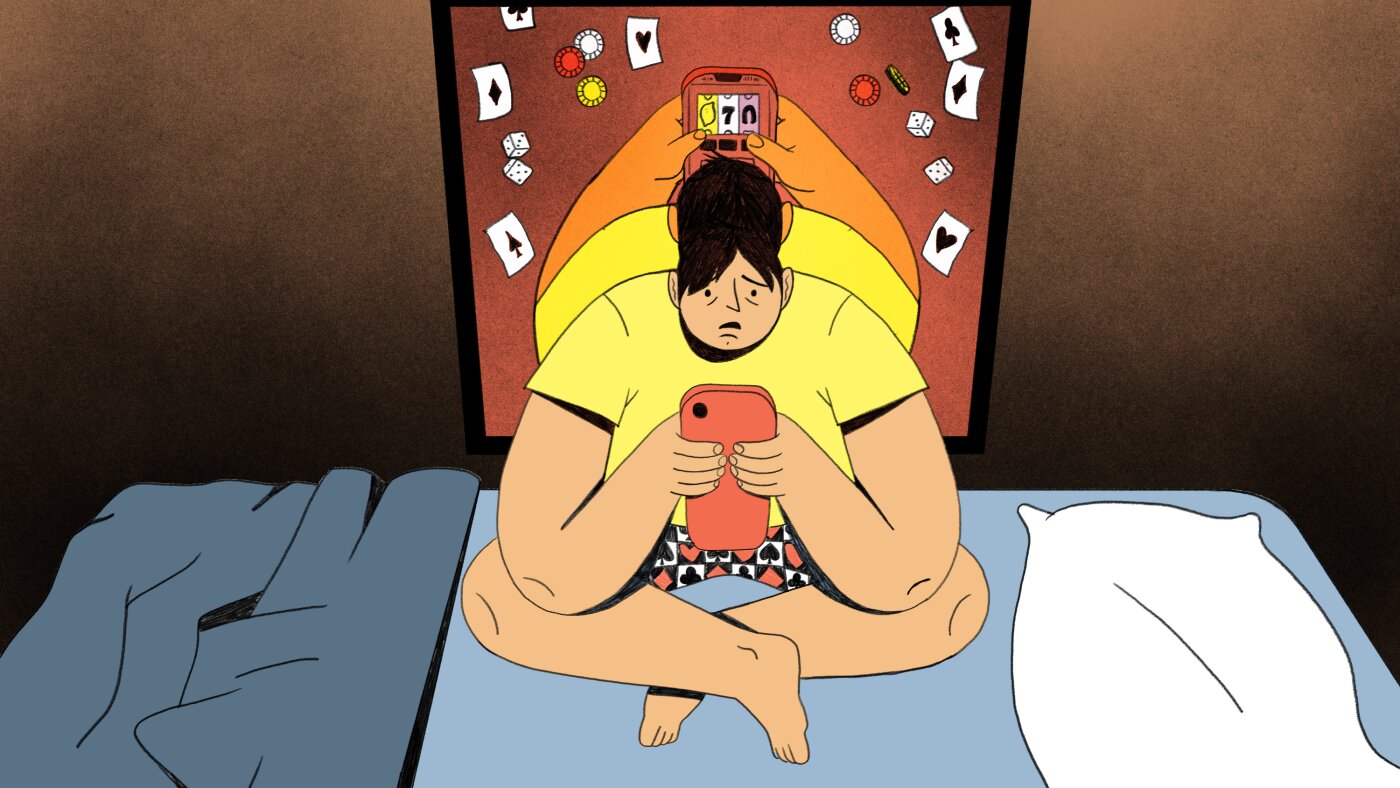
The unexpected issue surfaced when her eldest son, at 11, stumbled upon an offshore online casino through a link while watching a video game livestream. This seemingly innocent click led him into a world of online gambling, where he engaged in games like blackjack and poker using virtual items from the game as currency.
Despite participating in sports and maintaining good academics, the signs of addiction remained hidden until he dropped out of college at 19. It was then that Freudenberg discovered her son’s gambling habit, which had lasted for nearly a decade. He had resorted to selling household items, borrowing from friends, and eventually stealing from his parents to manage his debts.
This growing issue is not isolated. According to a national survey by Common Sense Media, 36% of boys aged 11 to 17 in the U.S. have engaged in gambling activities in the past year.
“It’s a lot of kids,” states Michael Robb, head of research at Common Sense Media. “A third of kids is a lot of kids.”
Robb emphasizes that while activities like fantasy football can foster friendships, a small percentage of young boys may develop problematic gambling behaviors. “The way [some kids] are engaging in gambling behaviors is already flashing red signs,” he warns.
The issue extends beyond teens. Gambling activities surged in the U.S. following a Supreme Court decision in 2018, which allowed states to legalize sports betting. This led to its legalization in 38 states by 2024, with Americans spending $121 billion on sports betting in 2023, as noted by The Journal of the American Medical Association (JAMA).
Despite legal restrictions, opportunities for underage gambling are plentiful. “If I wanted to bet on the [Washington] Nationals,” says Matt Missar, an addiction counselor, “20 years ago, as a teenager, I’ll go find a bookie and I’ll place a bet. Nowadays, I can bet on every single pitch of a game.”
Missar highlights the ease of gambling through smartphones, noting an increase in young adults seeking help for gambling and gaming addictions. “It’s not just that the problem arose when they’re 18,” he explains. “It started when they were 13 or 14 … and slowly over those years it became more of a problem.”
Freudenberg reflects on the subtlety of online gambling, which often resembles casual online activities. She believes the lack of traditional barriers has made it too accessible: “If my kid had to get in a car, drive to a bank, take out money, drive to a casino, go into the casino, show an ID at the door — he probably wouldn’t be a gambling addict.”
After several rehabilitation attempts, her son is now back in college and thriving. To support others facing similar challenges, Freudenberg helped establish a support group for parents of teen gamblers, which continues to grow in numbers.
Her concern is that many parents across the nation might be unaware of the looming issue. “The tsunami is on the horizon,” she cautions. “And it’s gonna be really, really bad.”