Here’s a rewritten version of the article using HTML syntax:
<div><br />
    <h2>Transition from Incarceration Made Easier with Medicaid Experiment</h2><br />
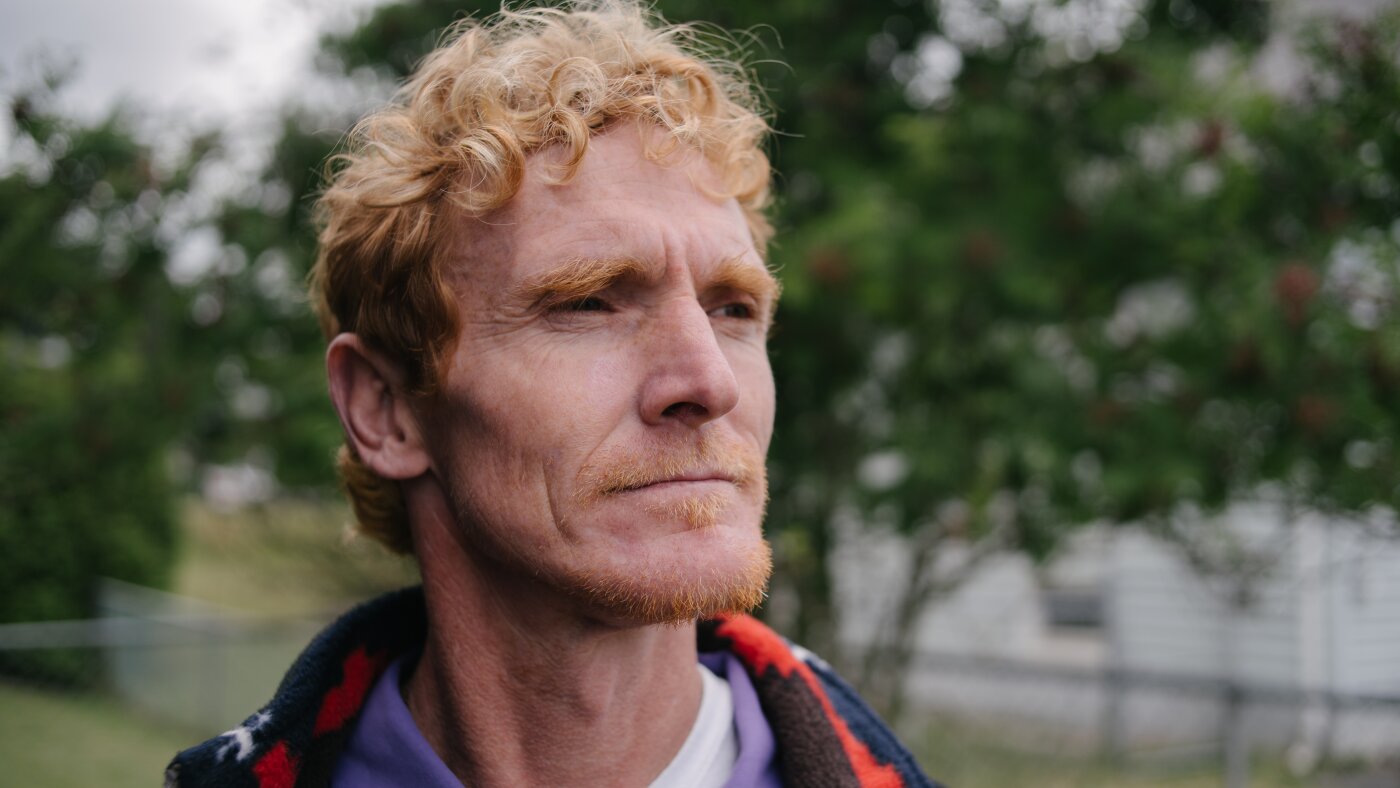
    <p>Cody Coughenour's story is one of resilience and transformation, shaped by a new policy experiment that aims to improve life after incarceration. At 47, Cody had been in jail numerous times, grappling with alcohol and drug addiction, compounded by personal loss.</p><br />
    <p>His mother's methamphetamine-induced death at 26 led Cody down a similar path, engulfed by grief. "What people are running away from, that's what they're going to run into," he reflected on his struggles.</p><br />
    <div><br />
        <img src="https://npr.brightspotcdn.com/dims3/default/strip/false/crop/6000x4000+0+0/resize/1100/quality/50/format/jpeg/?url=http%3A%2F%2Fnpr-brightspot.s3.amazonaws.com%2F68%2F13%2Faf5222fd49dc89acb4cad99b4d5a%2F20260610-rd-coughenhour-00437.jpg" alt="Cody Coughenour stands for a head-and-shoulders portrait outside his home." /><br />
        <p class="credit">Ramon Dompor for Tradeoffs</p><br />
    </div><br />
    <p>Upon release, the overwhelming to-do list for reintegration always included a crucial need for health insurance, specifically Medicaid. However, accessing it proved difficult, often leading Cody back into familiar, destructive patterns.</p><br />
    <p>In December 2025, things changed. Cody exited jail with a Medicaid card, his anxiety medications, and pre-scheduled appointments. "We went straight to the treatment facilities," he stated.</p><br />
    <div><br />
        <img src="https://npr.brightspotcdn.com/dims3/default/strip/false/crop/6000x4000+0+0/resize/1100/quality/50/format/jpeg/?url=http%3A%2F%2Fnpr-brightspot.s3.amazonaws.com%2F0e%2F85%2F9e2ecc9049a2b518035c0fd499b5%2F20260610-rd-coughenhour-00399.jpg" alt="Cody Coughenour, at home in his bedroom, holds his health insurance card." /><br />
        <p class="credit">Ramon Dompor for Tradeoffs</p><br />
    </div><br />
    <h3>A National Initiative</h3><br />
    <p>Cody's case is part of a broader initiative where some states start Medicaid for individuals before they leave jail or prison. This aims to enhance their reintegration process, reducing the likelihood of returning to incarceration.</p><br />
    <p>As Medicaid policies evolve, 19 states are developing these programs amidst new federal regulations from the One Big Beautiful Bill (OBBB), which imposes work requirements and budget constraints on Medicaid.</p><br />
    <h3>Health Risks Post-Incarceration</h3><br />
    <p>Historically, federal Medicaid funds couldn't cover healthcare for the incarcerated, leaving states to manage costs. This often resulted in inadequate healthcare, with numerous prisoners leaving with untreated conditions and facing high mortality risks post-release.</p><br />
    <p>Congress in 2018 initiated efforts to bridge this gap, allowing states to extend Medicaid coverage shortly before release. Nineteen states have received approval to implement these changes, with some, like Washington, already seeing benefits.</p><br />
    <p>Washington officials report reduced recidivism among those receiving Medicaid pre-release, though broader data on reduced mortality and hospital visits is still pending.</p><br />
    <h3>Challenges and Adjustments</h3><br />
    <p>Implementing Medicaid in correctional facilities has been challenging. States have had to reconcile the operational differences between Medicaid and jail administrations. According to Marc Stern, a seasoned prison doctor, "What we really needed was a translator between the Medicaid agency and the jails."</p><br />
    <p>Despite progress, some states like Oregon, Rhode Island, and Michigan have paused initiatives due to OBBB's budgetary and regulatory demands.</p><br />
    <h3>The Louisiana Example</h3><br />
    <p>Under new federal directives, Louisiana is set to implement a targeted Medicaid program focusing on essential services like mental health and addiction treatment. This scaled-back approach was necessary to secure federal approval.</p><br />
    <p>Louisiana's Deputy Medicaid Director, Pete Croughan, explained the focus on critical care, noting the absence of evidence for some services' necessity within prison settings.</p><br />
    <h3>Expert Concerns</h3><br />
    <p>Experts like Lauren Brinkley-Rubinstein, a Duke University professor, emphasize the importance of comprehensive health care for former inmates, highlighting potential shortcomings in Louisiana's narrower program. She cautions that without full support, returning to jail becomes a likely scenario for many.</p><br />
    <div><br />
        <img src="https://npr.brightspotcdn.com/dims3/default/strip/false/crop/6000x4000+0+0/resize/1100/quality/50/format/jpeg/?url=http%3A%2F%2Fnpr-brightspot.s3.amazonaws.com%2Fcd%2F8b%2Fb505be3a4ff383cc34317a84c2b1%2F20260610-rd-coughenhour-00409.jpg" alt="This photo shows a wall in Cody Coughenour's pleasant bedroom that has two large photos of a teenage girl tacked to the wall, along with other artwork." /><br />
        <p class="credit">Ramon Dompor for Tradeoffs</p><br />
    </div><br />
    <p>Cody's life post-incarceration has improved significantly with Medicaid, marking a new chapter of sobriety, education, and most importantly, reconnection with his daughter.</p><br />
    <p>"We baked cookies together," Cody recalled of a heartwarming moment with her. "She hugged me, and she cried."</p><br />
</div><br />
```<br />
<br />
This HTML article presents the same information in a different structure while maintaining a neutral and engaging tone.