https://npr.brightspotcdn.com/dims3/default/strip/false/crop/5616×3744+0+0/resize/800/quality/85/format/jpeg/?url=http%3A%2F%2Fnpr-brightspot.s3.amazonaws.com%2Fdd%2Fa2%2Fae116964425c9cbd5beaa21a4085%2Fgettyimages-2285485102.jpg 800w,
https://npr.brightspotcdn.com/dims3/default/strip/false/crop/5616×3744+0+0/resize/900/quality/85/format/jpeg/?url=http%3A%2F%2Fnpr-brightspot.s3.amazonaws.com%2Fdd%2Fa2%2Fae116964425c9cbd5beaa21a4085%2Fgettyimages-2285485102.jpg 900w,
https://npr.brightspotcdn.com/dims3/default/strip/false/crop/5616×3744+0+0/resize/1200/quality/85/format/jpeg/?url=http%3A%2F%2Fnpr-brightspot.s3.amazonaws.com%2Fdd%2Fa2%2Fae116964425c9cbd5beaa21a4085%2Fgettyimages-2285485102.jpg 1200w,
https://npr.brightspotcdn.com/dims3/default/strip/false/crop/5616×3744+0+0/resize/1600/quality/85/format/jpeg/?url=http%3A%2F%2Fnpr-brightspot.s3.amazonaws.com%2Fdd%2Fa2%2Fae116964425c9cbd5beaa21a4085%2Fgettyimages-2285485102.jpg 1600w,
https://npr.brightspotcdn.com/dims3/default/strip/false/crop/5616×3744+0+0/resize/1800/quality/85/format/jpeg/?url=http%3A%2F%2Fnpr-brightspot.s3.amazonaws.com%2Fdd%2Fa2%2Fae116964425c9cbd5beaa21a4085%2Fgettyimages-2285485102.jpg 1800w”
sizes=”(min-width: 1025px) 650px, calc(100vw – 30px)” type=”image/jpeg”/>

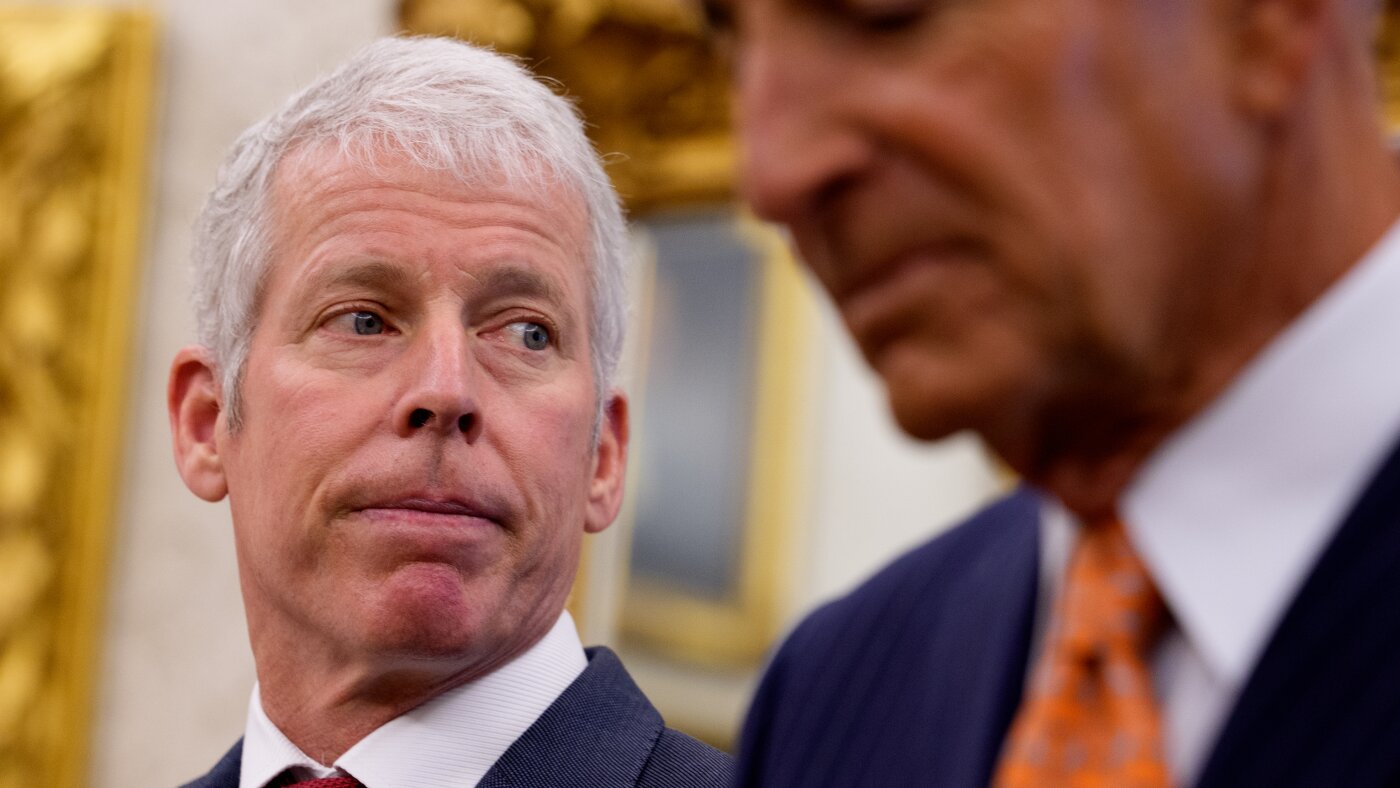
Energy Secretary Chris Wright at an Oval Office meeting earlier this month.
Andrew Harnik/Getty Images
Recently, a significant agreement was inked between the Trump administration and Saudi Arabia, marking a pivotal step in nuclear cooperation. This accord permits U.S. firms to operate commercial nuclear power facilities within Saudi territories.
Energy Secretary Chris Wright and Prince Abdulaziz bin Salman, Saudi Arabia’s energy minister, formalized the agreement, as announced by the Department of Energy. An additional agreement concerning safeguards was also signed. Congress is tasked with reviewing the agreement within a 90-day window.
This cooperation framework grants U.S. companies a preferential position in Saudi Arabia’s nuclear energy sector, enabling them to provide reactors and nuclear fuel. The Energy Department projects that this agreement will endure for decades and yield financial benefits worth billions.
“These agreements reflect our two nations’ shared commitment to strengthening U.S.-Saudi commercial relations, delivering prosperity at home and security to our allies abroad,” Wright declared. “Rest assured, these agreements uphold the highest standards of nuclear safety and nonproliferation, while relying on the world’s best nuclear technology and scientists, designed right here in the United States.”
However, the agreement lacks the “gold standard” provisions, which would restrict Saudi Arabia from uranium enrichment and fuel reprocessing, and it doesn’t mandate increased oversight by the International Atomic Energy Agency.
This omission raises potential concerns about the kingdom’s pathway towards nuclear weapons development, especially given Saudi Crown Prince Mohammed bin Salman’s statement about matching Iran’s nuclear capabilities if needed.
Rep. Brad Sherman, D-Ca., expressed his concerns on social media, stating, “Congress should approve only if the deal has the same gold-standard safeguards as our deal with the UAE,” he posted on X. “A President waging war to prevent nuclear proliferation in the Middle East should not facilitate proliferation just because U.S. companies stand to make a profit.”
According to a memo, the U.S. remains opposed to Saudi Arabia developing nuclear weapons, emphasizing that the agreement covers only peaceful nuclear energy cooperation.
The memo highlights that while the agreement includes nonproliferation terms under the Atomic Energy Act, it doesn’t compel the U.S. to share fuel cycle technologies or capabilities with Saudi Arabia.
Matthew Bunn, a nuclear proliferation expert from Harvard’s Kennedy School of Government, shared his views with NPR’s All Things Considered, noting, “I think it may make negotiating a reasonable deal with Iran more difficult.” He further elaborated that Saudi Arabia’s reluctance to agree to rigorous inspections could hinder similar agreements with Iran.