New Rule Alters Endangered Species Act, Sparking Debate Over Wildlife Protections
In a move that has sparked intense discussion, the Trump administration has finalized a regulatory change affecting the enforcement of the Endangered Species Act. Announced on Friday, this new rule removes a significant safeguard for wildlife habitats, potentially impacting various species.
The change involves narrowing the definition of “harm” within the Endangered Species Act, a decision with far-reaching consequences. Previously, the term encompassed any encroachments on areas housing threatened and endangered species. Under the new rule, activities such as oil and gas drilling, logging, and mining can proceed on critical habitats, provided the animals are not directly harmed or killed.
Environmental advocates have expressed concerns that this shift could lead to the extinction of some species by facilitating habitat destruction. They argue that habitat loss is a primary driver of extinction events. Industry representatives and some Republican supporters, however, argue that the 1973 environmental law has been applied too broadly, hindering economic development.
According to administration officials, the rule change aligns with the law’s original intent, as interpreted by a 2024 Supreme Court decision that curtailed federal agencies’ power to interpret environmental statutes. The previous definition of harm, they claim, encroached on private property rights.
This regulatory adjustment is part of a broader effort to modify wildlife protections during President Donald Trump’s tenure. Interior Secretary Doug Burgum stated, “For years, federal agencies abused the ESA to obstruct lawful land use and burden American families and businesses.”
The proposal for this change was initially introduced in April 2025, and despite opposition from environmentalists, it has now been enacted. Aaron Weiss, executive director of the Center for Western Priorities, criticized the move, describing it as “one of the most horrific attempts to harm wildlife in American history and a gift to the oil barons and foreign mining companies.”
The Endangered Species Act has played a crucial role in the recovery of iconic species such as the bald eagle, American alligator, and California condor, pulling them back from the brink of extinction.
Previously, during President Trump’s first term, several provisions of the Act were rolled back by Republicans, though these changes were later reversed under Democratic President Joe Biden.
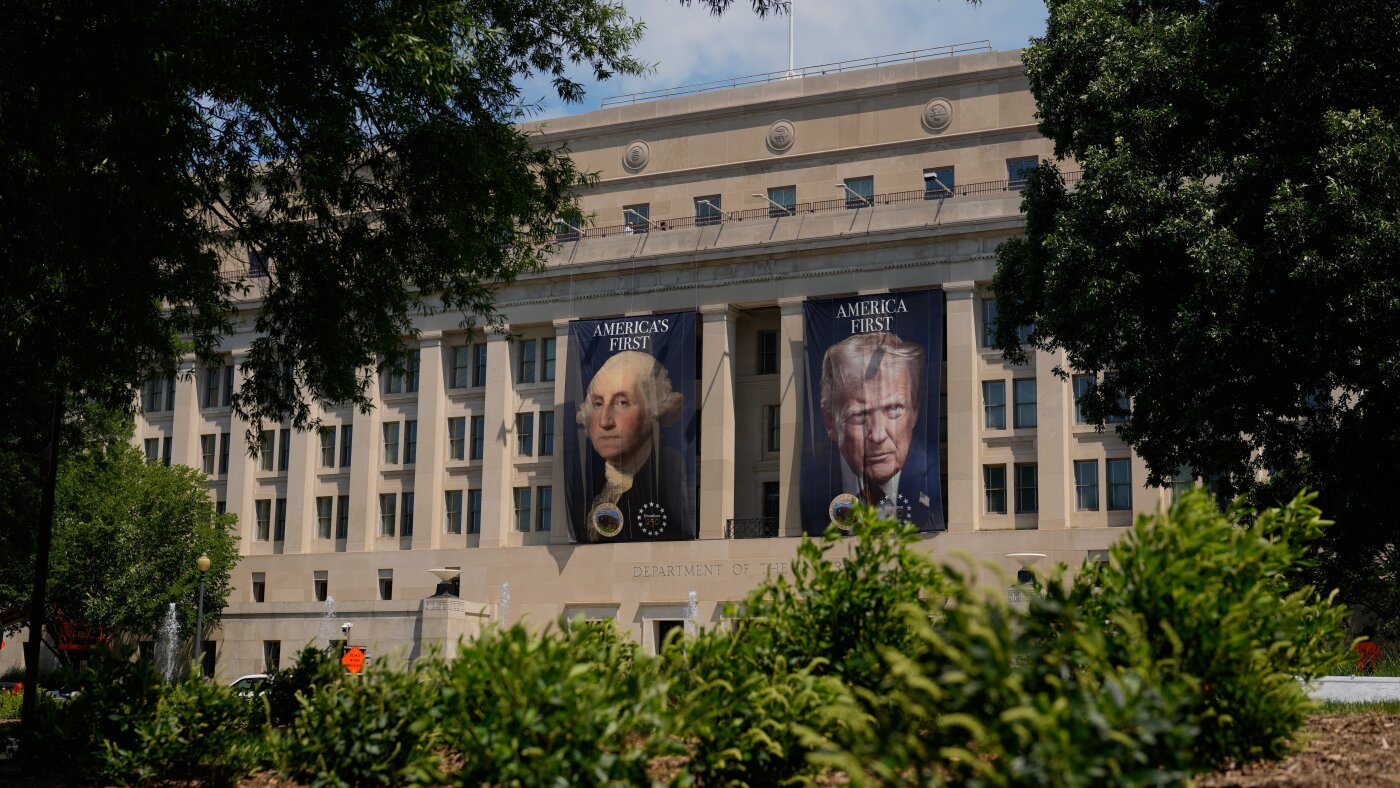
Banners of former President George Washington and President Donald Trump hang above an entrance to the Department of the Interior, Thursday, June 25, 2026, in Washington. Photo Credit: Carolyn Kaster/AP
This article was originally written by www.npr.org