The Archbishop of Canterbury’s Reflections on the Church and the Slave Trade
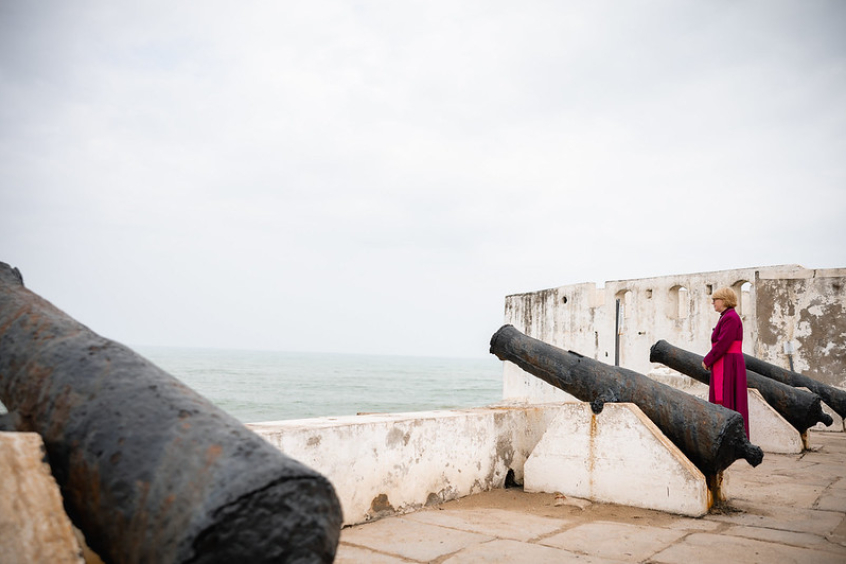
(Photo: Lambeth Palace)
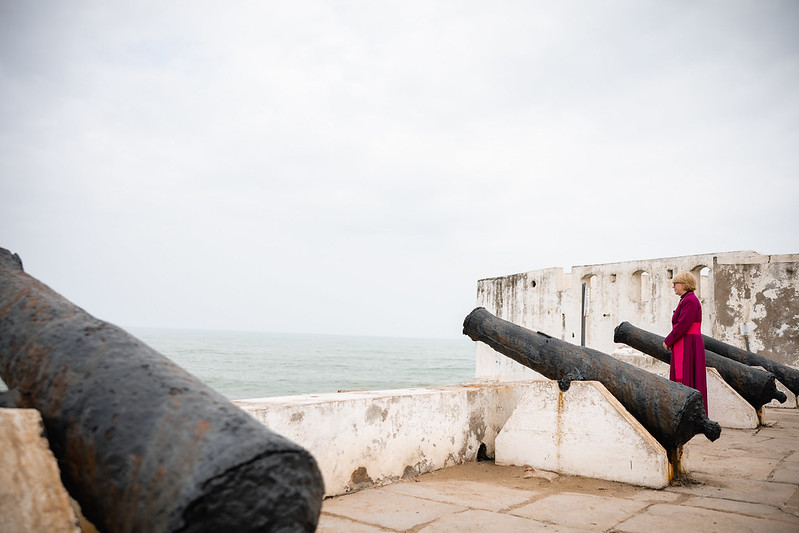
During a recent visit to West Africa, the Archbishop of Canterbury expressed deep sorrow for the Church’s historical involvement in the slave trade. Her tour included a significant stop at Cape Coast Castle in Ghana, a crucial site in the history of the transatlantic slave trade.
At Cape Coast Castle, once a departure point for enslaved Africans, Archbishop Sarah Mullally prayed in a former Anglican chapel, now an educational library, located above dungeons where men were held in dire conditions. “Being at Cape Coast Castle today and seeing the horrific conditions that thousands of people were kept in, it is impossible not to feel the weight of the immense evil that drove the transatlantic slave trade,” the Archbishop stated.
She continued, “We have a God who loves each one of us, who created each of us with an individual value and worth, and yet that was not recognised here. I pray not only in lament for the Church’s involvement in the slave trade, but also for hope – hope that the God of healing can bring justice and reconciliation to all who are still impacted by its legacy.”
In addition to her reflections, the Archbishop reiterated support for Project Spire, a £100m fund by the Church of England aimed at reparative justice for its historical links to slavery. This initiative follows findings that the Church’s predecessor endowment fund, Queen Anne’s Bounty, had connections to slavery through investments.
However, the establishment of this fund has faced delays due to legal challenges and criticisms regarding its timing, as many parishes struggle financially. Some critics, like Oxford professor Nigel Biggar, have accused African nations of “cynical opportunism” and questioned the narrative surrounding reparations.
Theologian Ian Paul voiced skepticism about the Archbishop’s approach, noting, “The irony is, in seeing the splendour of the throne of the King of Ashanti, that the wealth of his kingdom was historically built on slavery.” He further questioned why church leaders do not also highlight the Church’s role in ending slavery.
Bijan Omrani, historian and author, queried the lack of gratitude in the Archbishop’s prayers for those who fought against slavery, including British clergy and missionaries. Similarly, Conservative MP Nick Timothy criticized the use of funds on what he termed “gesture politics” while parish churches face financial hardships.
Gavin Ashenden, a former chaplain to Queen Elizabeth I, argued that while slavery was horrific, the Archbishop’s actions could undermine the reputation of those who worked to end it. He highlighted the efforts of abolitionists like William Wilberforce and the Clapham Sect in abolishing the British slave trade.
British military historian Robert Lyman questioned the allocation of £100m for reparations, suggesting a disconnect between the Church and its local congregations. He warned of the potential consequences for the Church’s future if such priorities continue.
This article was originally written by www.christiantoday.com