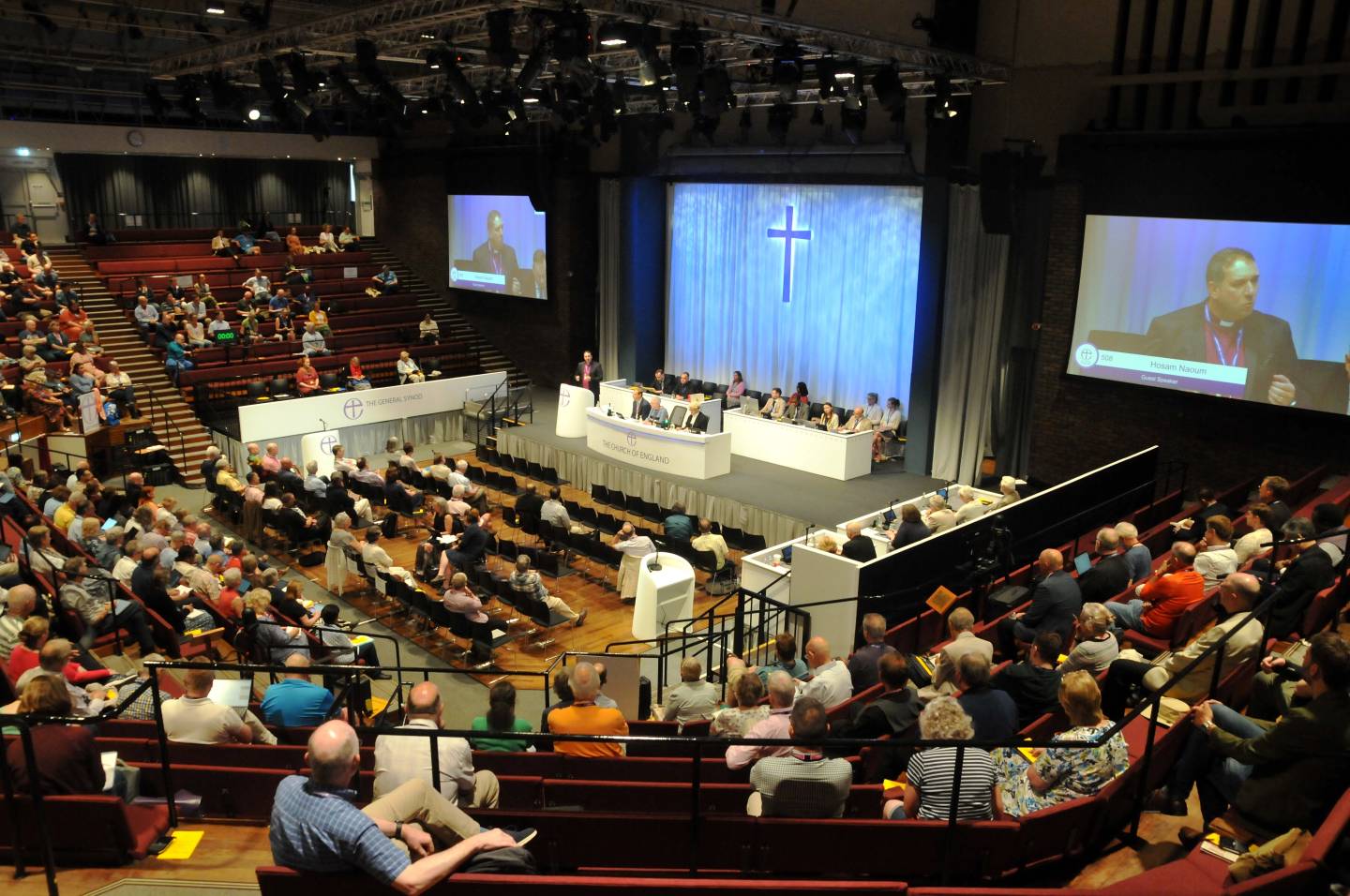
The Church of England’s decision-making body faced a contentious issue recently when it permitted a controversial fringe meeting to proceed while simultaneously denying a related exhibition. This decision has sparked intense debate over freedom of expression and the limits of church policy.
Rebecca Hunt, a barrister and lay member from the Portsmouth diocese, organized a fringe meeting titled ‘Journeys of Identity: Faith, Sexuality and Personal Experience’ during the General Synod. Originally named ‘People Change: sexual identity transformation’, the title was altered at York University’s request. The purpose of this event was to share stories of individuals who had embraced their identity in Christ and moved away from a gay lifestyle, claiming transformation through the Holy Spirit.
Despite opposition from 82 Synod members, including archdeacons, who raised concerns about safeguarding, the meeting was allowed to proceed. The Archbishops, after receiving assurance from Hunt that ‘conversion practices’ would not occur, permitted the gathering in a private room. The event, attended by around 40 people, featured speakers Dr. Mike Davidson and Matthew Grech, who shared personal transformations.
However, the Archbishops denied permission for a related display, citing reasons such as potential distress to passersby and conflict with previous Synod resolutions that deemed ‘conversion therapy’ potentially harmful. This decision aligns with a 2017 motion, though the definition of ‘conversion therapy’ remains debated.
The Church of England has historically allowed a variety of advocacy groups to express differing views, emphasizing dialogue over exclusion. The denial of the display raises questions about acknowledging former homosexuals within the church community. Legal perspectives, such as the Court of Appeal’s recognition in R (Core Issues Trust) v Transport for London, affirm the Equality Act 2010’s protection of individuals identifying as former homosexuals.
The absence of the display potentially limited opportunities for individuals seeking support to move away from same-sex attraction. The Synod’s decision has reignited discussions on the importance of freedom of expression and the church’s role in facilitating diverse dialogues.
Sarah Finch is a member of the Church of England General Synod for the Diocese of London.
This article was originally written by www.christiantoday.com