
(Photo: Rev Ian Faulds)
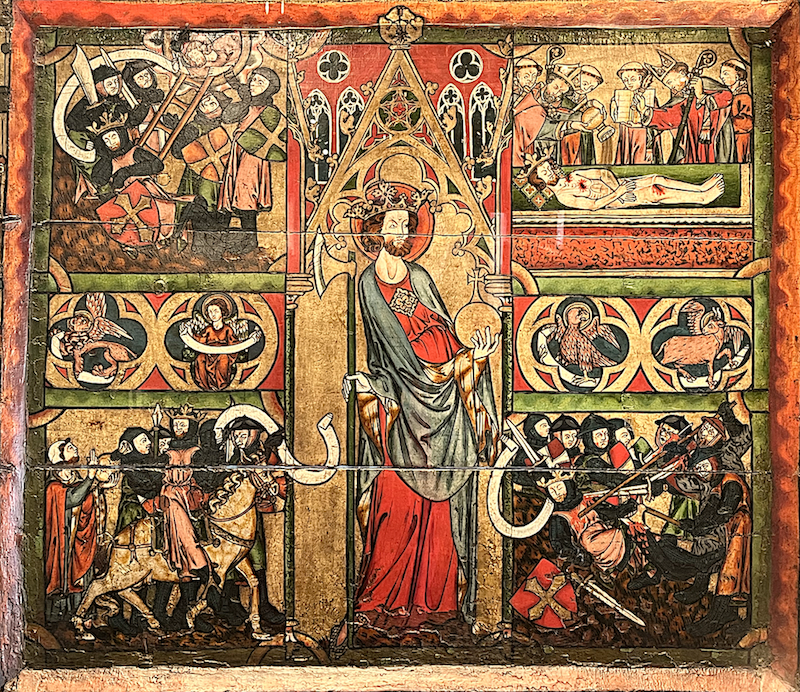
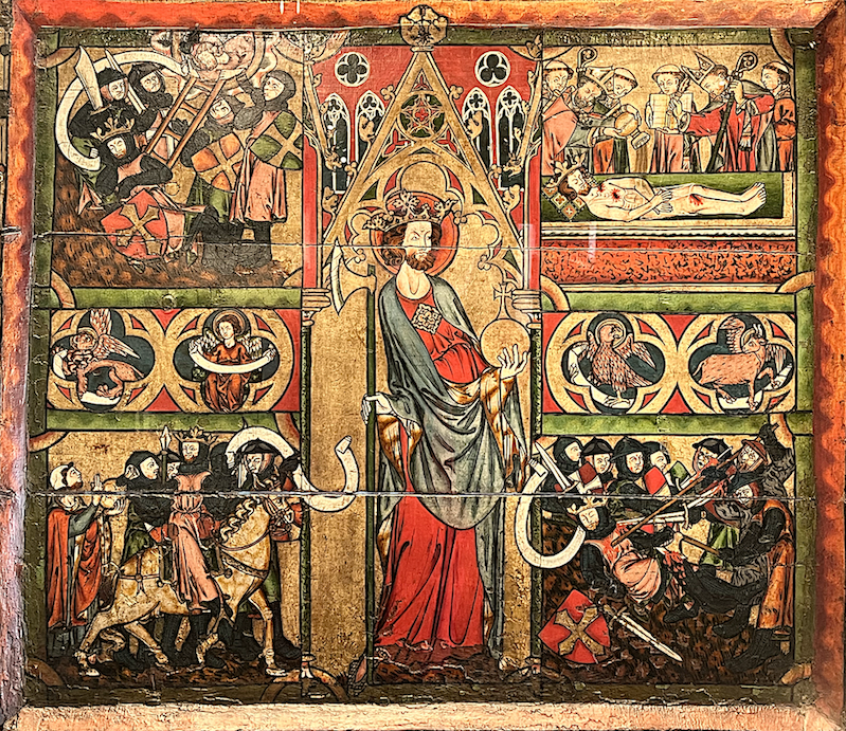
Every year on 29 July, people remember the life and legacy of St Olaf, the patron saint of Norway. His journey from a Viking raider to a Christian martyr is a fascinating tale that has left a lasting impact on Norway’s religious and cultural history.
Christianity’s Arrival in Norway
The introduction of Christianity to Norway is credited to Olav Tryggvason in AD 995, when he established the first church on the island of Moster in Vestland. Later, in 997, he founded Trondheim. A millennium celebration of this event took place in Moster in 1995, marking a significant milestone in Norway’s religious transformation.
The Viking Beginnings of Olaf Haraldsson
Born into a royal lineage, Olaf Haraldsson was the son of King Harald Grenske of Norway and a descendant of Harald Fairhair, Norway’s first king. Olaf’s early years were marked by Viking raids across northern Europe. He participated in notable attacks, such as on London in 1009 and East Anglia in 1010, and was involved in the sacking of Canterbury in 1011.
Conversion and Return to England
Olaf’s transformation began in 1013 during his stay in Normandy, where he embraced Christianity and was baptized in Rouen. This newfound faith led him back to England to support Christian King Ethelred in 1014 against the pagan Danes.
A Vision for Norway
Prompted by a dream, Olaf returned to Norway in 1015 with a mission to unify the kingdom under Christianity. After securing his rule in 1016 at the Battle of Nesjar, Olaf invited missionaries to Norway and worked to establish a Christian nation.
The Church Code of 1024
In 1024, Olaf and Bishop Grimkell held a synod at Moster, introducing a religious code inspired by English laws. This code laid down the foundations of ecclesiastical governance and reformed several Norse practices, such as ending the exposure of weak infants and the sacrifice of slaves.
Tragic End at Stiklestad
Olaf’s efforts to consolidate royal power led to his exile in 1028 due to opposition from Norwegian nobles allied with Canute the Great. Attempting a return in 1030, Olaf was killed at the Battle of Stiklestad, his death marking him as a martyr and paving the way for his sainthood.
Legacy and Sainthood
Declared a saint by Bishop Grimkell in 1031, Olaf’s legacy grew as stories of miracles spread. By 1164, Pope Alexander III recognized him as a Catholic saint. St Olaf stands as a symbol of Norwegian independence, represented by an axe on Norway’s coat of arms.
Nidaros Cathedral and Pilgrimage
Nidaros Cathedral in Trondheim, built over Olaf’s burial site, became a central pilgrimage destination and a symbol of Norse Christianity. Pilgrims still travel St Olav’s Way, a route from Oslo to the cathedral, reminiscent of the Camino de Santiago.
St Olaf’s Influence Worldwide
The cult of St Olaf spread throughout Europe, with over 300 churches dedicated to him. His influence reached the British Isles and even North America, where Norwegian emigrants named churches after him. In London, St Olave’s Church in Hart Street stands as a reminder of his enduring legacy.
Cultural Celebrations and Honors
Olsok, the celebration of St Olaf’s Day, combines religious and cultural events in Norway and beyond. The Royal Norwegian Order of St Olav, founded in 1847, honors Norwegians for distinguished service. As plans for the millennium of Olaf’s death in 2030 take shape, his impact endures in history and culture.
Norse Sagas and Modern Tributes
The stories of St Olaf are preserved in the Heimskringla sagas. Recently, Norwegian footballer Erling Haaland acquired a copy for public study, ensuring Olaf’s story continues to inspire future generations.
This article was originally written by www.christiantoday.com





Comments are closed.