Religious Leaders Advocate for Ethical AI Use Amid Rapid Technological Advancements
(Photo: Lambeth Palace)
As artificial intelligence continues to evolve, prominent religious figures like the Archbishop of Canterbury and Pope Leo XIV are urging for its ethical application to enhance rather than replace human roles.
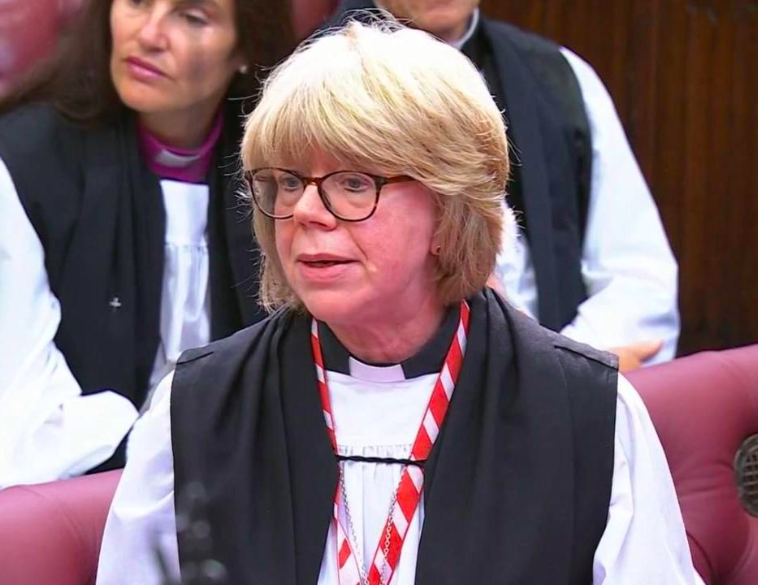
In a recent address to the House of Lords, Archbishop Sarah Mullally emphasized that AI, described as “a remarkable product of human creativity,” offers vast opportunities across various sectors, yet poses challenges that may outpace humanity’s readiness to manage them morally and spiritually.
Mullally stressed the importance of ensuring that AI does not “diminish” our humanity. She referenced Pope Leo XIV’s encyclical, which states, “humanity – in all its grandeur and woundedness, must never be replaced or surpassed.”
The Pope’s document also highlights concerns over the militarization of AI, noting that it could make conflict more impersonal and hasten violence by transforming defense into threat prediction, thus dehumanizing victims by reducing them to mere data.
Recalling her nursing background, Mullally remarked on AI’s role in making childbirth safer. However, she pointed out that AI cannot substitute the human touch, such as a nurse delivering difficult news with empathy and understanding.
The Archbishop also raised concerns about AI’s impact on human relationships, with people increasingly turning to chatbots for companionship. Of particular concern is the misuse of chatbots for simulating harmful scenarios like incest and abuse, which Mullally warned could lead to “the normalisation and the legitimisation of such abuse.”
In her closing remarks, Mullally called for inclusive societal discourse on AI’s role. “Technology this revolutionary must not simply be unleashed on our societies: it must be developed with us and for us – at a human pace, with human objectives,” she urged.
She concluded by emphasizing the need to prioritize humanity over profit, convenience, or unchecked technological advancement: “To ensure that we harness AI to serve humanity, to be an extraordinary tool in the creation of a more just, abundant and hope-filled world.”
This article was originally written by www.christiantoday.com