
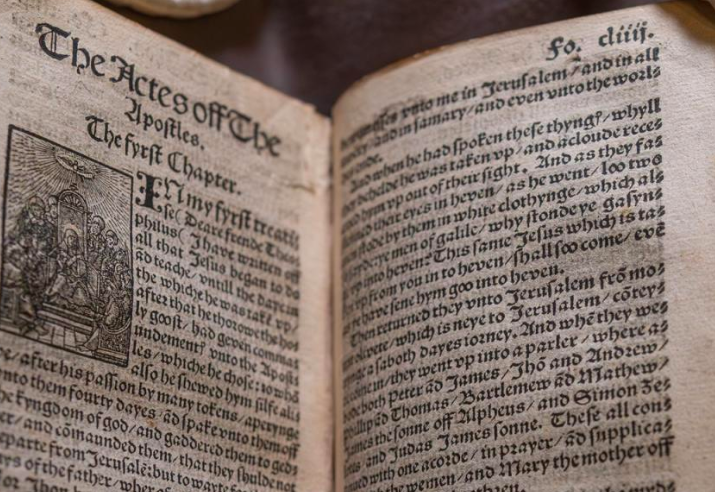
(Photo: St Paul’s Cathedral)
Across England, a significant milestone is being observed as churches, cathedrals, and Christian organizations commemorate half a millennium since the printing of the first English New Testament. The events celebrate a pivotal moment in religious history…
500 Years of the Tyndale New Testament
This year marks 500 years since William Tyndale’s New Testament was first published in 1526. It signified the first English translation from Greek, as well as the initial printed version in English. Before Tyndale, the only English translation was from the 14th century by Wycliffe, translated from Latin and manually copied, rendering it outdated over time.
In 1526, under the rule of Henry VIII, England was predominantly Catholic and English Bibles were prohibited. The Bible’s availability in English was met with resistance, requiring clandestine efforts to distribute copies.
The Reformation’s Influence
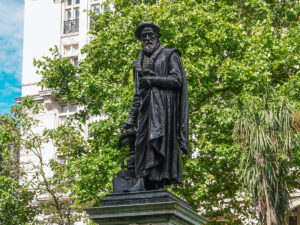
William Tyndale, born around 1490 in Gloucestershire, pursued education at Oxford University and was ordained in 1515. Meanwhile, Erasmus published his Greek New Testament in 1516, highlighting discrepancies in the Latin Vulgate. The Reformation gained momentum with Martin Luther’s 1517 protests, leading to translations of the New Testament into vernacular languages like German and French.
Creating an English New Testament
Tyndale, inspired by Erasmus and Luther’s works, aimed to translate the New Testament into English. He observed a widespread lack of biblical knowledge among both clergy and laity, which fueled his mission. As John Foxe recounted, Tyndale declared, “I will cause the boy who driveth the plough to know more of the Scriptures than thou dost.”
Efforts in London and Beyond
In England, a law from 1407 required a bishop’s approval for Bible translations. Tyndale sought permission from Bishop Cuthbert Tunstall in London but was denied. Undeterred, Tyndale left for Europe, where he continued his work with support from like-minded individuals.
In 1525, Tyndale’s printing efforts in Cologne were interrupted, prompting a move to Worms where he successfully completed and printed his English New Testament in 1526. Copies were secretly brought into England, but many were confiscated and destroyed.
Legacy and Language
Tyndale’s translation played a significant role in shaping the English language. His work formed the foundation for subsequent versions like the King James Bible, and his phrasing remains evident in modern translations such as the Revised Standard Version and the English Standard Version.
Exhibitions and Celebrations
The surviving copies of Tyndale’s New Testament are displayed in various exhibitions, including at the British Library and St Paul’s Cathedral. Additional exhibitions are planned in locations like Tewkesbury Abbey and Scarborough.
Honoring Tyndale’s Impact
In recognition of this anniversary, events across the UK highlight the significance of the English Bible. Churches and groups are hosting services and talks, facilitated in part by the Tyndale Society, which has organized a range of commemorative activities.
Exploring Tyndale’s Journey
For those interested in following Tyndale’s historical path, trails in Gloucestershire and London are available. Enthusiasts can also embark on a journey along the River Rhine, retracing the steps from Cologne to Worms.
Resources and Further Information
The Tyndale Society hosts monthly online discussions about Tyndale’s enduring influence. For more details on events and resources, visit the Tyndale Society website or their Facebook page.
This article was originally written by www.christiantoday.com




Comments are closed.