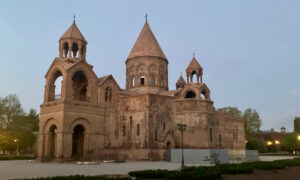
In a significant move towards addressing the longstanding challenges faced by Christian communities in Egypt, the government has granted legal status to 191 more churches and church-affiliated buildings. This approval marks another step in the ongoing efforts to mitigate restrictions on Christian worship facilities across the nation.
The latest approvals were announced following a cabinet session led by Prime Minister Mustafa Madbouli on May 19. This development is part of a broader initiative that began in 2016 when the government initiated a review process for unlicensed churches.
Since the start of this governmental program, 3,804 churches and related buildings from various Christian denominations have received formal recognition. Many of these establishments had been functioning without official approval for years.
The initiative follows the enactment of Egypt’s 2016 Church Construction Law No. 80. This law shifted the authority to approve church construction and renovations from security agencies to provincial governors, addressing longstanding complaints from Christians about the difficulties in obtaining necessary permissions.
However, the legislation does not encompass all religious communities. While Sunni Muslim mosques are governed by different regulations, minority groups such as Ahmadi Muslims, Baha’is, and Shia Muslims remain outside the scope of this law.
Mervyn Thomas, founder president of Christian Solidarity Worldwide (CSW), is calling on the Egyptian government to continue the process of resolving the legal status of religious buildings erected in past decades. He also advocates for extending recognition to other unrecognized religious minorities.
Thomas emphasized that such measures would align with the rights enshrined in the Egyptian constitution and reflect President Sisi’s commitment to promoting religious freedom and equality. “This would reflect the rights provided in the Egyptian constitution and the personal commitment of President Sisi towards promoting freedom of religion or belief and equality of citizenship,” he stated.
Egypt hosts the largest Christian population in the Middle East. Christians account for approximately 10% of the country’s population, which exceeds 100 million people.
Despite constitutional assurances of religious freedom, discrimination and social pressure persist for many Christians, especially in rural regions and southern areas where Islamist extremism is prevalent.
Alliance Defending Freedom (ADF) International, a human rights organization, notes that Christians face workplace discrimination, school bullying, and restrictions related to church construction. In extreme cases, they encounter sectarian violence, including bombings and sexual assaults.
Converts from Islam to Christianity endure even greater challenges, facing family ostracism, legal obstacles, and blasphemy-related accusations.
CSW has reported that authorities frequently fail to respond effectively to these incidents.
Lizzie Francis Brink, legal counsel for global religious freedom at ADF International, commented: “Among the persecuted are Egypt’s Christians, who live in a land of ancient wonders and rich history—yet face daily discrimination, harsh restrictions, and constant pressure to hide their faith. Despite Egypt’s status as a cultural and historical giant in Africa, it remains an ongoing struggle for many believers.”
This article was originally written by www.christiantoday.com