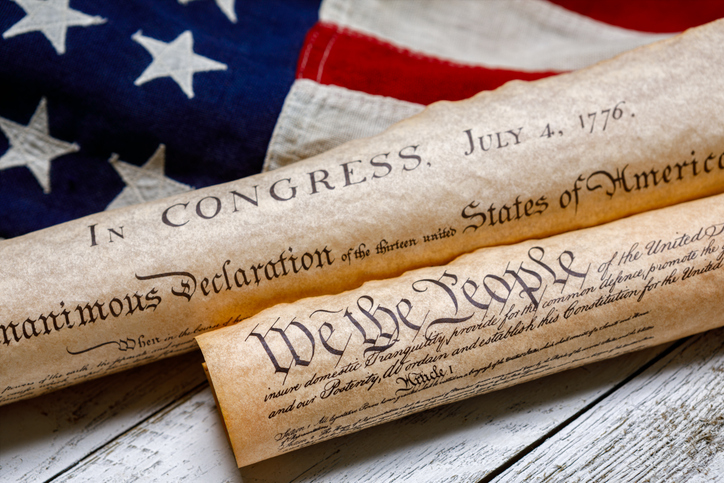
A pivotal moment in the tapestry of North American history is being commemorated this year as the United States marks the 250th anniversary of the Declaration of Independence. While July 4, 1776, stands out as the iconic date, it’s essential to note that the journey to independence involved several key moments.
Independence was officially voted on by the Continental Congress on July 2, 1776, through the ‘Lee Resolution,’ a date that John Adams, one of the Founding Fathers, believed would be celebrated as a great national anniversary. However, it was on July 4, 1776, that Congress approved the final draft of the Declaration, and on August 2, 1776, most delegates signed the engrossed parchment, which remains preserved today.
Powerful Words and Their Impact
The Declaration’s opening lines carry a timeless resonance:
“We hold these truths to be self-evident, that all men are created equal, that they are endowed by their Creator with certain unalienable Rights, that among these are Life, Liberty and the pursuit of Happiness.”
Earlier in the preamble, it asserts the colonies’ right to separate from British rule and claim their place among the global powers, as entitled by “the Laws of Nature and of Nature’s God.”
A Contested Legacy
At the time, those involved recognized the monumental nature of the Declaration. John Adams wrote to Abigail Adams on July 3, 1776, declaring:
“The Second Day of July 1776, will be the most memorable Epoch, in the History of America.”
Benjamin Franklin reportedly remarked at the signing, acknowledging the risks involved:
“We must all hang together, or, most assuredly, we shall all hang separately.”
Thomas Jefferson later reflected on the Declaration as an “expression of the American mind,” a sentiment that resonated deeply with future leaders like Abraham Lincoln, who viewed it as critical to understanding American political identity.
However, the lofty ideals of equality and unalienable rights were not universally applied. Frederick Douglass, in 1852, questioned the relevance of the Fourth of July to enslaved African Americans, highlighting the disparity between the Declaration’s promises and the reality faced by many.
Native Americans and women were also excluded from these rights. The land ownership dynamics for Native Americans would soon change, and women’s rights were largely ignored during that era.
The Christian Nation Debate
The creation of the United States raised questions about its spiritual identity. Some later figures, including Woodrow Wilson and Ronald Reagan, emphasized the notion of America as a Christian nation. President Donald Trump echoed similar sentiments, aligning closely with US Christian nationalists.
Prominent evangelical figures like Pat Robertson have also asserted the Christian foundation of the United States, though such claims are often debated and remain complex.
Many contemporary evangelicals have shifted from declaring America a Christian nation to advocating for a return to Christian roots, reflecting a nuanced understanding of the nation’s historical and cultural identity.
The Faith Journey of a Nation
Christianity played a significant role in shaping early American society, notably through the Mayflower settlement of 1620 and the ‘Bible Commonwealths’ of New England. However, the integration of Puritan politics into broader colonial governance was challenged by the British crown, leading to a more secular approach.
Despite this, Christian influence persisted into the 18th century, contributing to the ideological framework of the Declaration of Independence. The Founding Fathers, influenced by Enlightenment rationalism, crafted a document that balanced religious references with secular principles.
The Treaty of Tripoli in 1797 and Thomas Jefferson’s advocacy for a “wall of separation between Church and State” underscore the secular foundations of the United States. The First Amendment further cemented religious freedom, ensuring that no religious test could be imposed for public office.
Throughout the 19th century, Christianity maintained a privileged position in American society, as seen in legal cases like ‘The People v. Ruggles’ and ‘Church of the Holy Trinity v. United States.’ These historical developments laid the groundwork for the complex interplay between religion and politics in the US.
As the nation celebrates its 250th anniversary, it is crucial to reflect on those who were initially excluded from the Declaration’s promises and to acknowledge the intricate faith-history that has shaped the United States.
This article was originally written by www.christiantoday.com