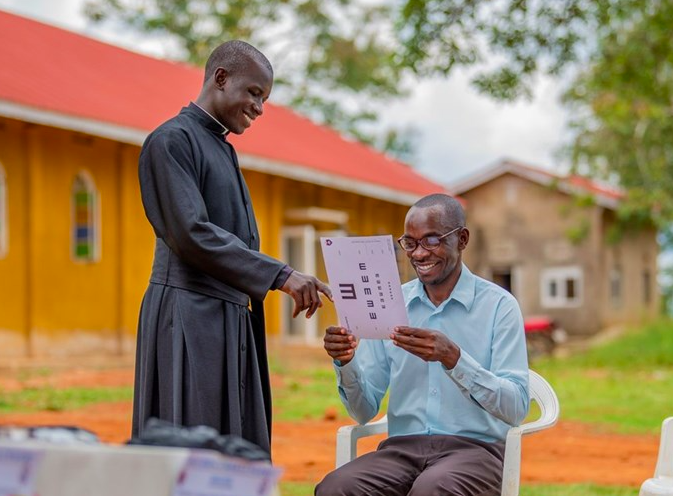
Churches in Africa Extend Role by Providing Vision Care Through Unique Partnership
In many African communities, churches have long been pillars not just for spiritual guidance but also for community support. A new initiative is now expanding this role by enabling churches to provide essential vision care services. This effort, led by VisionSpring in collaboration with church networks in Uganda, Zambia, and Malawi, aims to train pastors to conduct vision screenings and distribute affordable reading glasses.
For adults in low-income and rural areas, impaired vision can significantly impact daily activities, from earning a living to engaging with religious texts. VisionSpring’s Reading Glasses for Improved Livelihoods programme addresses this gap by empowering churches to provide much-needed vision care.
Churches as Key Partners in Vision Care
Rev Irene Akuku, a health coordinator with the Church of Uganda, explained, “It’s now been one year since we started partnering with VisionSpring in East Busoga Diocese. As part of the programme we were trained in how to screen people’s eyes and provide reading glasses. This is very necessary because many people have eye problems – some that we could not really address before.”
Julius Mujuni, VisionSpring’s Uganda lead, highlighted the severe shortage of eye care professionals, noting that Uganda’s population exceeds 50 million, yet there are only about 200 ophthalmologists. “There are nearly 5 million Ugandans that need reading glasses and cannot easily access them,” he added.
Rev Irene further elaborated on the practical benefits, stating that making glasses accessible has allowed congregants to engage more fully in daily activities and spiritual practices. “Already we have screened over 1,000 people and been able to give out reading glasses to almost 700 people at an affordable price,” she noted.
Addressing Myths and Building Trust
Julius emphasized the importance of changing perceptions about glasses, particularly in low-income communities. He explained, “What VisionSpring is doing is normalising the wearing of glasses in low-income communities by changing the perception that glasses are a privilege for the select few.” The programme addresses myths like glasses harming eyesight or being unnecessary for those not in school.
Churches play a crucial role in overcoming these misconceptions due to their trusted status within communities. “We worked with the Anglican Church of Uganda because… it has a footprint across the country and we can use existing church structures to leverage that community trust,” Julius mentioned.
Expanding the Programme’s Reach
The programme’s success has sparked interest from additional dioceses seeking to participate. Julius reported, “We are getting constant calls from other dioceses saying they also need this programme and asking us when we will start there too.”
Pastors involved in the initiative have responded positively, often being the first to receive glasses themselves. “When they themselves have experienced this immediate effect on their ability to read small text, they’re amazed,” Julius stated.
A Broader Vision for the Global Church
Julius believes this model offers valuable insights for the global Church. “The Church has a role to play across so many sectors… not only through biblical teachings and nourishing people spiritually, but in strengthening their communities,” he said.
This article was originally written by www.christiantoday.com