(Photo: Facebook)
The U.S. House of Representatives has passed a measure to withhold all United States aid to Nigeria until its government takes significant action to address and prevent violence within its borders. This decision is embedded in the Fiscal Year 2027 National Security, Department of State and Related Programs Appropriations Act, and awaits further approval from the Senate and President Donald Trump.
Initially, the proposed legislation sought to withhold 50% of U.S. assistance to Nigeria. However, an amendment introduced by Rep. Greg Steube, R-Fla., successfully increased this to 100%, pending certification by the U.S. secretary of state that Nigeria is taking effective measures to protect Christians and hold those responsible for religious violence accountable.
“My amendment to withhold 100% of U.S. aid to Nigeria until its government stops the slaughter of Christians has passed,” Steube announced on X following the vote. “American taxpayers should never bankroll governments that turn a blind eye while Christians are abducted, tortured, and murdered.”
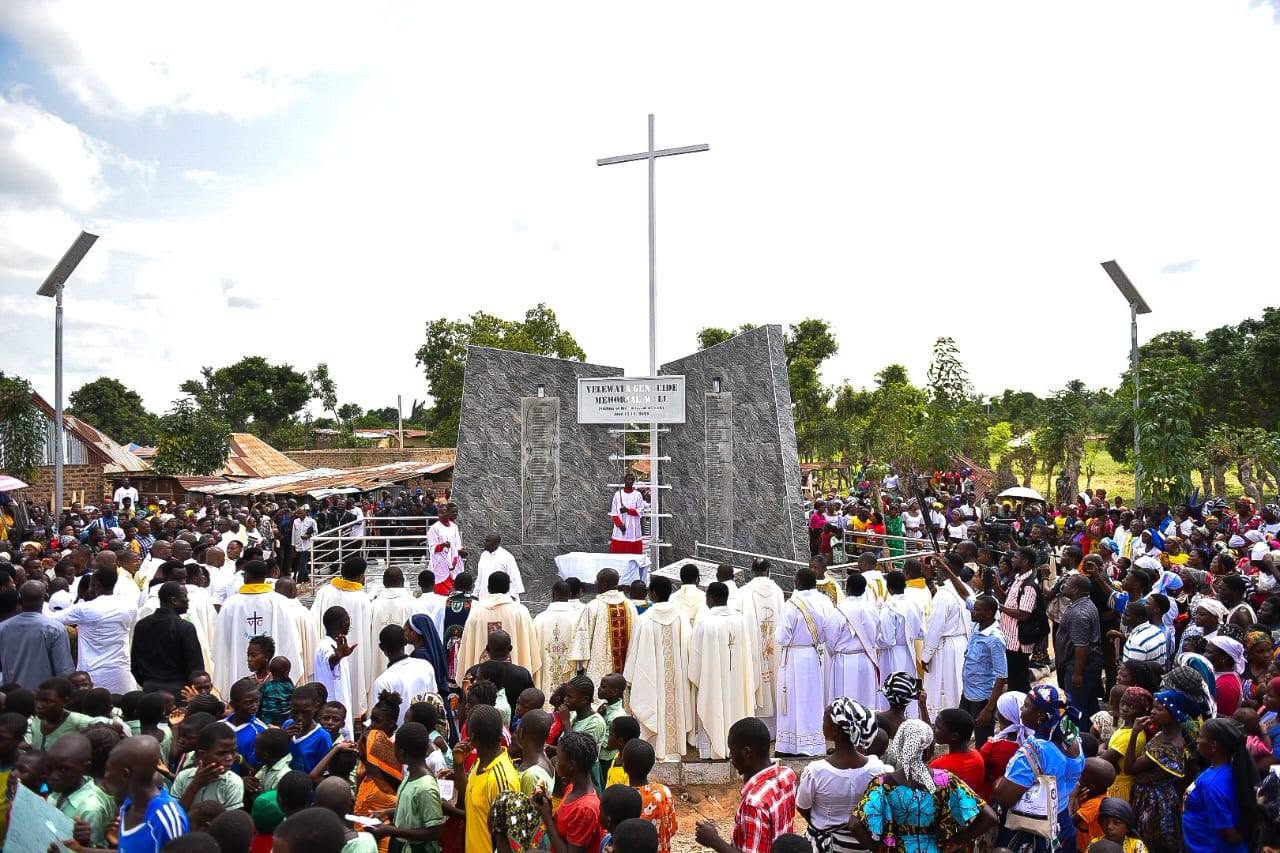
This legislative move aims to compel President Bola Tinubu’s administration to enhance security in areas where Christian communities have been frequently targeted by armed factions. Rep. Riley Moore, R-W.V., emphasized that Christians in Nigeria have faced prolonged violence, receiving inadequate protection from their government.
“Christians in Nigeria continue to endure horrific violence, murder, and persecution while a majority of the world turns a blind eye to their suffering,” Moore stated post-passage. “This important bill also holds foreign governments accountable and ensures American taxpayer dollars advance our national interests.”
Should the legislation be enacted, it could impact millions of dollars in American aid that support various sectors in Nigeria, including health care, humanitarian relief, security cooperation, and development initiatives. In 2024, the U.S. allocated approximately $929 million in foreign aid to Nigeria, making it a significant aid recipient in sub-Saharan Africa, though this amount decreased to $616 million in 2025 according to U.S. foreign aid data.
The potential suspension of aid could complicate the collaborative efforts between Washington and Abuja in combating extremist groups in northern Nigeria.
Nigeria’s Security Challenges
Nigeria is currently grappling with numerous security issues, including insurgencies by Boko Haram and the Islamic State West Africa Province in the northeast and armed criminal gangs in the northwest. The Middle Belt has seen violence between farming communities, nomadic herders, and armed militias, leading to significant casualties over the past decade.
Christian organizations argue that Christians have been disproportionately targeted, particularly in Plateau and Benue states. However, human rights groups and conflict researchers contend that the situation is complex, affecting both Muslims and Christians, though Christians have also been attacked specifically for their faith.
Factors such as religious extremism, competition over resources, ethnic tensions, organized crime, and weak governance fuel the insecurity, complicating the Nigerian government’s response strategy.
The Tinubu administration has consistently rejected allegations of a government-backed campaign against Christians, insisting that terrorism and violence affect all citizens irrespective of religion.
The legislative move reflects a broader shift in U.S. policy under the Trump administration, linking foreign aid to religious freedom concerns. Earlier this year, Moore stated that the legislation followed a congressional investigation into violence against Christians in Nigeria, conducted at Trump’s request.
Supporters assert that the proposed aid conditioning will compel Nigerian authorities to prioritize security reforms and aggressively prosecute attackers. However, critics warn of unintended consequences, including weakening programs that benefit ordinary Nigerians.
The debate continues on how to characterize the violence in Nigeria. While many religious leaders view the attacks on Christian communities as systematic persecution, some researchers advise against oversimplifying Nigeria’s security crisis into a single religious narrative.
The Senate must still approve its version of the appropriations bill, and lawmakers need to reconcile differences before it can be signed by Trump. Nonetheless, the House vote highlights growing concerns over religious freedom in Nigeria within Washington.
© Christian Daily International
This article was originally written by www.christiantoday.com