Remarkable Byzantine-Era Settlement Uncovered in Egypt’s Dakhla Oasis
(Photo: Ministry of Tourism and Antiquities)
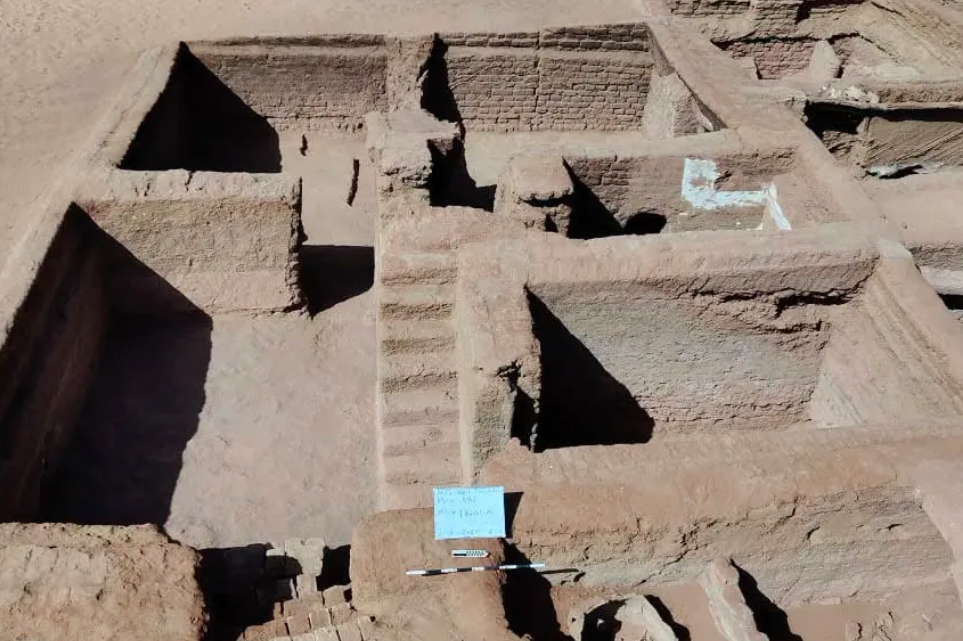
In the heart of Egypt’s Western Desert, archaeologists have unveiled a well-preserved Byzantine-era settlement in the Dakhla Oasis, shedding light on an ancient Christian community that thrived over 1,600 years ago. This extraordinary discovery offers insights into the daily lives, religious practices, and social organization of early Christians in this remote region.
The excavation, led by Egypt’s Supreme Council of Antiquities at Ain Al-Sabil in the New Valley Governorate, is one of the most intact Byzantine-period urban sites found in the Western Desert. It highlights the extensive spread of Christianity in the fourth century when Egypt was part of the Byzantine Empire.
Central to the ancient city is a basilica-style church from the mid-fourth century AD, believed to have been the focal point of worship for a well-established Christian community. Among the notable findings is the residence of Tisus, a church deacon, which provides evidence of early Christian worship practices before larger churches were common.
Another significant discovery is the home of Tapibos, also thought to have been an early Christian gathering place. Mahmoud Massoud, director general of Dakhla Antiquities and head of the excavation mission, stated that the settlement featured “all the architectural components of a fully functioning community,” including streets, public squares, homes, and places of worship.
The urban layout was meticulously planned with north-south streets intersecting east-west roads, creating spaces for public activities. Defensive structures like watchtowers and a fortified building suggest the settlement was designed for both communal life and protection.
Artifacts discovered during the excavation offer a glimpse into daily life in this ancient settlement. Archaeologists found bread ovens, kitchens, stone grinding tools, and other items related to food preparation. They also uncovered bronze coins featuring Byzantine emperors, Christian symbols, and Latin inscriptions, along with gold coins from the reign of Roman Emperor Constantius II.
Significantly, nearly 200 pottery fragments, known as ostraca, were found. Inscribed in Coptic and Greek, these fragments detail commercial transactions, correspondence, and aspects of everyday life. Diaa Zahran, head of Egypt’s Islamic, Coptic and Jewish Antiquities Sector, noted that these texts provide “an exceptional documentary record” of the city’s inhabitants.
This discovery underscores Egypt’s pivotal role in early Christian history and emphasizes the presence of Christian communities in remote areas, contrasting with the well-documented Christian heritage of cities like Alexandria. The Dakhla Oasis, deep within the Western Desert, is currently on UNESCO’s Tentative List for potential World Heritage status.
In addition to the Dakhla Oasis findings, Egyptian archaeologists announced the discovery of 18 ancient tombs at the Marina el-Alamein site near Alexandria. These included rock-cut tombs, limestone-built burial structures, pottery, lamps, and a granite sarcophagus containing human remains undergoing further study.
The remnants of homes, places of worship, and written records from the Dakhla Oasis reveal a resilient community of believers who lived, worked, and maintained their faith in a challenging desert environment, providing enduring evidence of their once-flourishing settlement.
This article was originally written by www.christiantoday.com