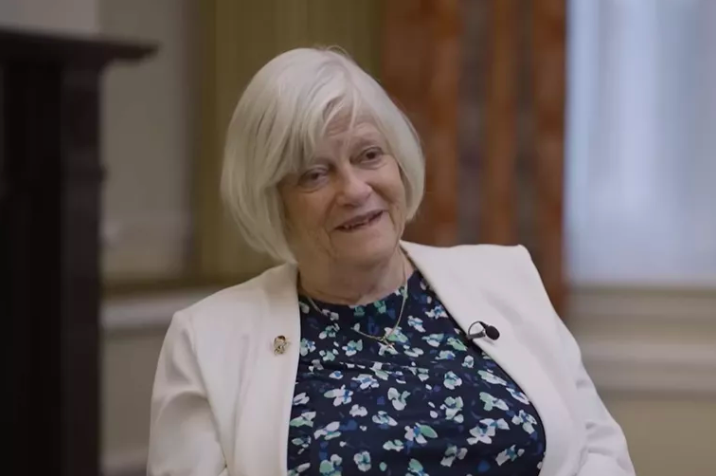
The recent tribute to Ann Widdecombe in the House of Lords has sparked a call for increased tolerance and respect in political discourse. Widdecombe, a 78-year-old Reform politician and devout Catholic, was found dead in what has been described as a “targeted attack,” currently under investigation by Counter Terrorism Policing.
In a heartfelt session, Lord Alton praised Widdecombe’s intelligence and principles, while highlighting the need to foster an environment of respect for differing opinions. “Ann was intelligent, principled and kind. Yes, her beliefs were founded on those twin pillars of faith and patriotism in a very toxic environment, fuelled often … by hatred,” he remarked.
Lord Alton emphasized the importance of upholding minorities and creating a space where differences can be expressed with tolerance. He suggested honoring Widdecombe’s memory by working towards such an environment and proposed a book of condolence for her.
Concerns about the current political climate were echoed by Conservative peer Lord True, who condemned those who mocked or welcomed Widdecombe’s death. “To those who sneered about Ann Widdecombe after the news of her death or, worse, welcomed her death, I say that to try to unsay such things when you learn of the manner of her death does not make it okay. Your shameful words are indelible, and their stain lies not on her but for ever on you,” he stated.
Lord True further criticized the prevalence of hatred in politics today while commending Widdecombe’s strong principles, clarity in convictions, and commitment to serving her community. Known for her hard work as a constituency MP, Widdecombe was celebrated for her dedication to her causes.
Lord Forsyth of Drumlean, the Lord Speaker, shared a personal tribute to his long-time friend, noting her courage and empathy. However, he also pointed out the absence of Church of England bishops during the tribute session. “She had that quality that guarantees all other virtues: immense courage,” he said, adding that Widdecombe’s deep faith and service were commendable.
The absence of bishops drew criticism on social media, especially considering Widdecombe’s past as an Anglican before converting to Catholicism in response to the Church of England’s decision to ordain women as bishops in 1993.
This article was originally written by www.christiantoday.com